
Hi friends!
How long do leftovers last? Most cooked dishes keep for 3 to 4 days in the fridge, and soups for 2 to 3 days, according to Health Canada. If you won’t eat them by then, freeze them, and when in doubt, throw it out.
It’s Thursday, and there’s a Sunday lunch box in your fridge looking at you with big guilty eyes. Eat it or toss it? Let’s make that decision easy.
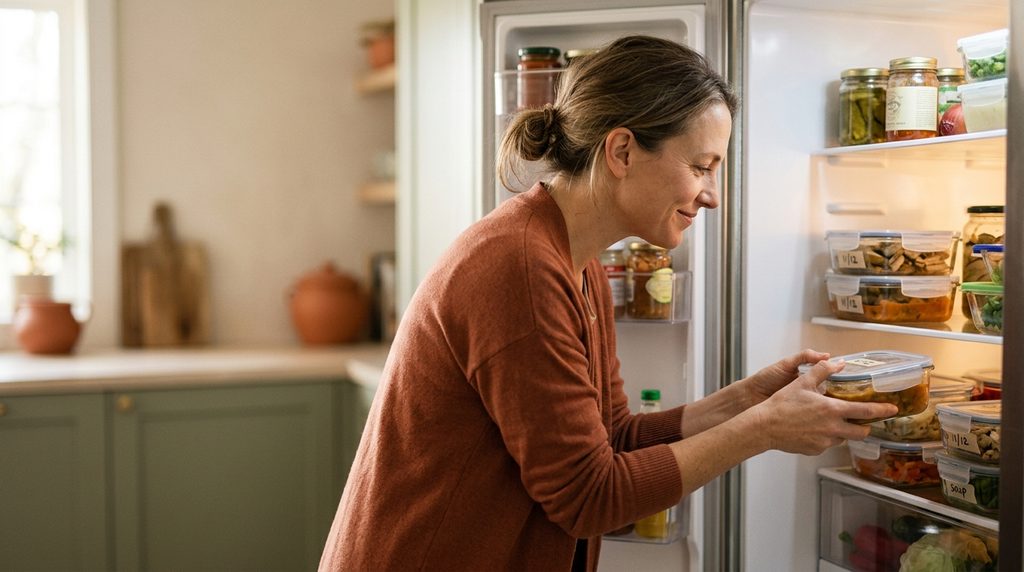
How long do leftovers last in the fridge and freezer?
Here’s the chart, straight from Health Canada’s safe food storage guide. It assumes your fridge is at 4°C (40°F) or colder and your freezer at -18°C (0°F).
| Food | Fridge | Freezer |
|---|---|---|
| Cooked meat, stews, egg or vegetable dishes | 3 to 4 days | 2 to 3 months |
| Cooked poultry and fish | 3 to 4 days | 4 to 6 months |
| Meat broth and gravy | 3 to 4 days | 4 to 6 months |
| Soups | 2 to 3 days | 4 months |
The fridge times are for safety, and the freezer times are for quality. So frozen food stays safe, it just tastes best within those windows.
Back to that Sunday box. If you cooked on Sunday, Thursday is already around day four, the very edge of the window. Count from the day you cooked, and if you’re unsure, don’t risk it.
How should I cool and store leftovers?
The goal is to cool food fast and keep it clean. Here’s what Health Canada recommends:
- Refrigerate leftovers promptly in shallow containers so they cool quickly
- Don’t overstock the fridge, so cool air can circulate
- Use clean containers, and keep different leftovers separate
- Put cooked food in the fridge or freezer within two hours
I use Food Storage Containers with Lids because the lids close tight and nothing leaks into my bag. Also, they go from fridge to microwave, which means fewer dishes to wash.
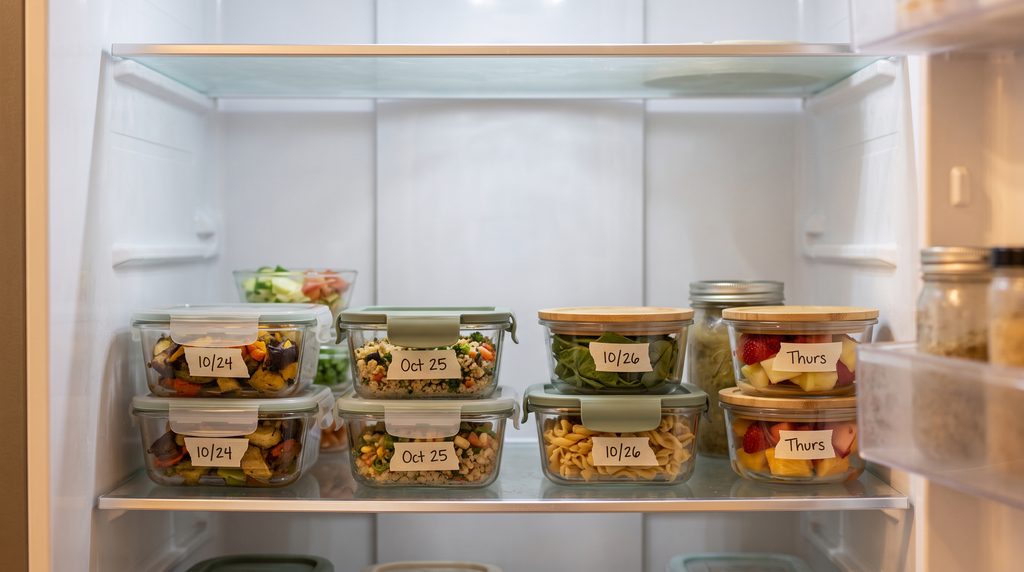
How do I know when to throw leftovers out?
Here’s the rule: when in doubt, throw it out. You can’t tell if food is unsafe by how it looks, smells or tastes.
Toss your leftovers if:
- They’ve been out at room temperature for more than two hours
- They’re past the time window in the chart above
- You can’t remember when you made them
- You already reheated them once and didn’t finish
My favorite trick is a $10 fix. Date everything with Dissolvable Food Labels or Dry-Erase Marker for Containers, and the Thursday mystery is over.
How do I reheat and thaw leftovers safely?
Reheat leftovers to 74°C (165°F), and use a food thermometer if you have one. Then, discard what you don’t eat.
For thawing, use the fridge or the microwave, and eat the food soon after it thaws. Never thaw on the counter.
Want an easier system?
Honestly, the best fix is making fewer boxes. Cook less on Sunday, eat the first four days, and freeze the extra. That’s the idea behind my Sunday Meal Prep for People Who Hate Meal Prep.
If you want more flexible lunch ideas and real photos, I wrote The Fit-ish Lunchbox. Get it here
FAQ
Is it 2 to 3 days or 3 to 4 days?
You’ll see both. Health Canada’s current chart lists 3 to 4 days for most cooked dishes and 2 to 3 days for soups. If you want extra margin, aim for three days or freeze.
Can I eat leftovers if they look and smell fine?
Not necessarily. Harmful bacteria can’t be spotted by sight, smell or taste, so follow the time windows instead.
How long can cooked food sit out?
No more than two hours at room temperature. After that, throw it away.
Your turn
Leftovers shouldn’t cause stress. Cool them fast, label them and trust the calendar, not your nose.
Curious about me and why I started this blog? Come say hi on my About page.
So tell me in the comments: what’s the oldest thing you’ve ever found hiding in your fridge? 😅
I’m not a food safety professional, so please check Health Canada for official guidance.
This post contains affiliate links. If you purchase through them, I may earn a small commission at no extra cost to you.