
Hi friends! 👋
Here’s the short version: quick family dinners don’t need fancy recipes or a calculator. All you need is a simple plate formula, a few smart shortcuts, and permission to be imperfect.
In other words, dinner shouldn’t feel like a math problem. So, let me share the rules that keep my kitchen running with three hungry teenagers.
- Build the plate, don’t count it
- Use shortcuts without any shame
- Cook once, eat twice
- Eat together whenever you can
Why does dinner feel so hard?
Let’s be honest. By 6 p.m., you’re tired, everybody is starving, and someone asks “what’s for dinner?” for the third time. 😅
On top of that, the internet makes it worse with perfect meal plans, color-coded containers, and recipes with 27 ingredients. Fortunately, real life calls for something much simpler.
What’s my kitchen philosophy?
I’m Brazilian, so my comfort food is rice and beans, and honestly, it’s a pretty great dinner template. My philosophy is dead simple: quick, stress-free meals that feed a busy family without turning dinner into a math problem.
I don’t weigh, measure, or track anything. Instead, I use a few easy rules, and they work whether you’re feeding a crowd or just yourself.
Rule 1: Build the plate, not a spreadsheet
Canada’s Food Guide makes this super easy. The plate idea is to fill half with vegetables and fruit, a quarter with whole grain foods, and a quarter with protein foods. The best part? There’s zero counting involved.
Better yet, you don’t have to nail it at every meal. The guide itself points out that it’s just a guide, so aim for variety, balance, and flexibility over time. It also suggests choosing protein foods that come from plants more often.
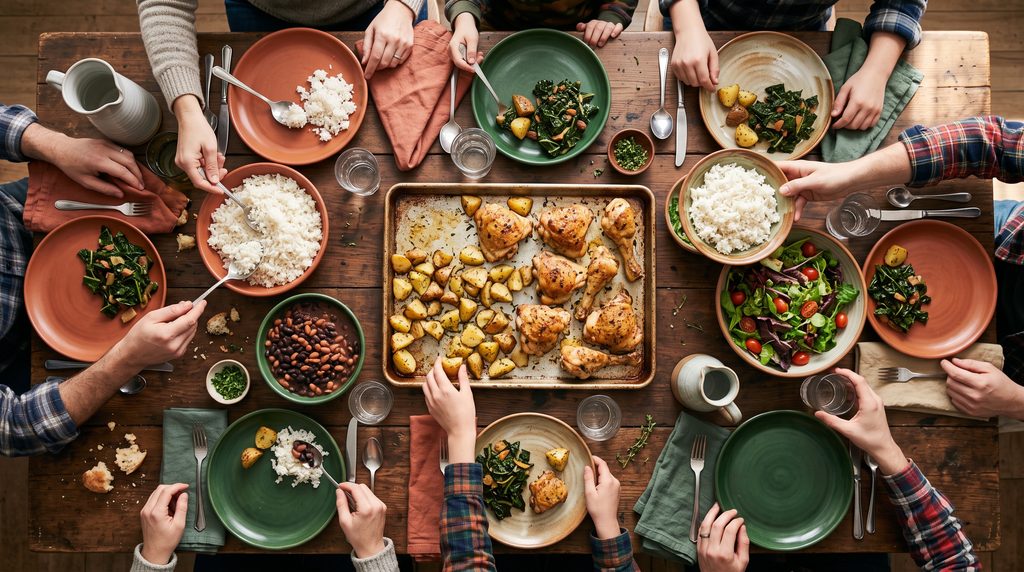
For example, my classic plate looks like this:
- Rice (a quarter of the plate)
- Beans (a quarter of the plate)
- Sautéed greens, salad, or whatever veggies are in the fridge (half of the plate)
Done. Dinner is served, and nobody needed a calculator. 🍚
Rule 2: Follow the 3-step dinner formula
When my brain is fried, I use this formula. It works with almost anything in your kitchen.
- Pick a protein: chicken, eggs, beans, lentils, fish, or tofu
- Add a grain or starch: rice, pasta, tortillas, or potatoes
- Throw in vegetables: fresh, frozen, roasted, or raw
Then, mix and match all week. Tacos one night, pasta with veggies the next, and a sheet pan of chicken and potatoes after that.
Rule 3: Shortcuts are not cheating
This one changed my life. Frozen, canned, and pre-cut foods are all fair game, and the Food Guide agrees that fresh, frozen, and canned vegetables and fruits are all good choices.
So, here are my favorite shortcuts:
- Frozen vegetables, which are already washed and chopped
- Canned beans or chickpeas for instant protein
- Bagged salad for a no-effort side
- Pre-cut veggies for the nights when chopping feels impossible
If you want to stretch your budget, try swapping half the meat for lentils. As one grocery guide based on Canada’s Food Guide suggests, replacing half the meat in a recipe with lentils is an easy way to add plant protein.
Rule 4: Cook once, eat twice
Double batches are a busy parent’s best friend. Cook extra rice, extra beans, or extra chicken, and you’ve basically made tomorrow’s dinner already.
However, leftovers need to be handled safely. According to Health Canada, you should refrigerate leftovers promptly in shallow containers, and eat them within 2 to 3 days or freeze them. Also, reheat leftovers to 74°C (165°F) before serving.
Rule 5: Put the teens to work
Here’s a secret: hungry teenagers are also free labor. 😄 In fact, research suggests this could help. Kathryn Walton, a researcher who studied this at the University of Guelph, says that including teens in meal prep and keeping dinner casual can help families eat together more often.
So, give everyone a job:
- One person chops
- Another stirs
- Someone sets the table
- The DJ picks the dinner playlist 🎶
Why does eating together matter?
Sharing a meal is about more than food. A University of Minnesota study followed more than 1,500 students from high school to age 20. It found that teens who ate family meals tended to eat more fruit and dark green and orange vegetables, and drank fewer soft drinks, as young adults.
In addition, a review from Rutgers University found that teens who ate at the family table more often showed fewer signs of depression and felt their family was more supportive. However, the atmosphere matters too, since families who watched TV together or ate fast food out didn’t see the same improved diets.
A quick reality check: these studies show associations, not guarantees. Still, any meal you share counts, and it doesn’t have to be fancy or perfect. 💚
What if my household looks different?
Of course, every home is different. Here’s how to adapt these rules:
- Big family: make sheet-pan meals and big pots that stretch for seconds
- Couples: cook a double batch and enjoy leftover lunches
- Cooking for one: freeze single portions so future-you is always fed
- Picky eaters: set up build-your-own tacos or bowls so everyone customizes
- Tight budget: lean on beans, lentils, eggs, and frozen vegetables
What does a week of no-math dinners look like?
Here’s a sample week. Think of it as a menu, not a rulebook.
- Monday: rice, beans, greens, and an egg on top
- Tuesday: build-your-own tacos with lentils or chicken
- Wednesday: sheet-pan chicken with potatoes and broccoli
- Thursday: pasta with veggies and chickpeas
- Friday: pizza night, plus a big salad on the side 🍕
- Saturday: soup and toasted bread, using up leftovers
- Sunday: fried rice with leftover rice, veggies, and eggs
What are some 10-minute emergency dinners?
Some nights fall apart, and that’s totally normal. When that happens, try one of these:
- Scrambled eggs with toast and frozen veggies
- Quesadillas with a quick salad
- Canned beans over rice with avocado
- Pasta with frozen peas and a little cheese
FAQ: Quick family dinners
What are healthy quick family dinners?
Look for meals built on the plate formula: half vegetables and fruit, a quarter whole grains, and a quarter protein. Rice and beans with veggies, tacos with lentils, and sheet-pan chicken all fit the bill.
How do I feed hungry teenagers without cooking for hours?
Cook bigger batches and rely on shortcuts like frozen veggies and canned beans. Also, let your teens help in the kitchen, because many hands make dinner faster.
Are frozen vegetables okay for family dinners?
Absolutely. According to Canada’s Food Guide, fresh, frozen, and canned vegetables are all good choices. Therefore, stock your freezer and relax.
Final thoughts: dinner doesn’t have to be perfect
Quick family dinners are about showing up, not about showing off. So, build the plate, use the shortcuts, cook once, and eat together when you can. Some nights it’ll be a masterpiece, and some nights it’ll be eggs on toast. Both count. 🍽️
Now I’d love to hear from you: what’s your go-to dinner when you have zero energy? Tell me in the comments! 👇
Disclaimer: I’m not a dietitian or a doctor, and this post is for general information only, not medical advice. If you or someone in your family has allergies or a health condition, please check with a healthcare professional about your meals.
Sources & Further Reading
- The plate method (half veggies and fruit, a quarter whole grains, a quarter protein): Creating healthy meals using Canada’s Food Guide (Canadian Cancer Society)
- Canada’s Food Guide plate: Use Canada’s food guide plate to make any meal (Health Canada)
- Fresh, frozen and canned vegetables, and swapping meat for lentils: Canada’s Food Guide plate tips (FreshCo)
- Safe handling of leftovers: Food safety tips for leftovers (Health Canada)
- Including teens in meal prep: Even when families have issues, eating together can improve teen diets (Diabetes Education Services)
- Family meals and diet quality in young adulthood: Eating Together As A Family Creates Better Eating Habits Later In Life (ScienceDaily)
- Family meals, teen well-being and meal atmosphere: Why Families Who Eat Together Are Healthier (TIME Healthland)