
Hi friends!
Here’s the short answer. How to sleep during the day comes down to a dark, cool and quiet room, a steady schedule, and caffeine only at the start of your shift. It isn’t about willpower.
I work overnight, so I go to bed around 6:30 a.m., right when the world is waking up. These are the tricks that help me get real rest, with no guilt and no perfect routine required.
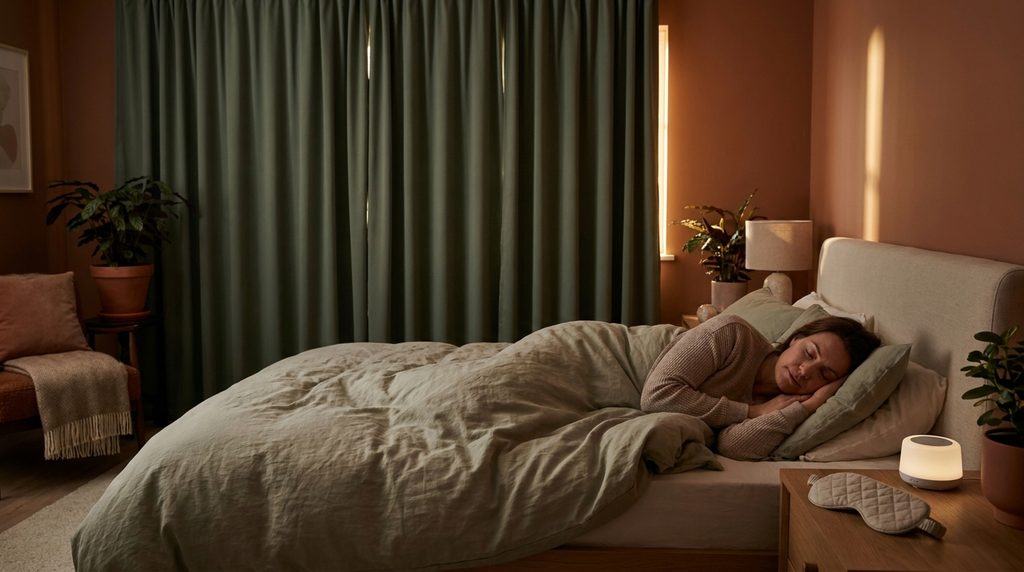
Why is it so hard to sleep when the sun is up?
Your body is wired to be awake in daylight and asleep in the dark. So when you lie down at 7 a.m., your internal clock is basically yelling, “Why are we doing this?”
Add neighbors, delivery trucks and a world that never got the memo, and sleep gets even harder. If you wake up groggy or restless, it isn’t a personal failure. It’s biology meeting a very loud morning.
How to sleep during the day: my 5-part setup
Think of it as building a little night inside your bedroom. Start with one or two steps, then add more as you go.
1. Make it dark (like, cave dark)
Light is the biggest signal telling your brain to wake up. I use Thermal Insulated Blackout Curtains to keep the sun out, and a 3D Contoured Sleep Mask as backup for the sneaky light that always finds a gap.
2. Make it quiet
Daytime noise is a real sleep thief. A White Noise Machine for Sleeping covers up the random sounds, and yes, the percussionist in me is asking for quiet.
Also, tell the people around you your sleep hours. A sign on the door and a note near the doorbell save a lot of interruptions.
3. Keep it cool
A slightly cool room helps your body settle down. Many sleep experts suggest roughly 15 to 19°C (60 to 67°F). Even a warm room can make daytime sleep feel broken, so open a window at night or use a fan.
4. Watch caffeine and light
Here’s a classic mistake: that coffee at the end of your shift. Health experts note that caffeine can linger in your system for hours.
So keep coffee for the first half of your shift, and skip it in the last six hours before bed. Also, bright light helps you stay alert at work, while sunglasses on the drive home help your brain wind down.
5. Protect your schedule
Try to sleep at the same time every day, even on days off, or at least keep a few hours overlapping. Consistency tells your body what to expect.
Right before bed, skip the heavy or spicy meal, and put the phone down. A small routine, like a warm shower or stretching, helps your brain switch off. Often I do my 5-minute routine from Why Your Knees Crack When You Stand Up before I go to bed.
Can naps help when you work nights?
Yes, a short nap of 20 to 30 minutes before or during your shift can take the edge off. Just avoid long naps late in the shift, because they can make it harder to fall asleep after work.
On top of that, prep your meals so you’re not cooking half-asleep. My Sunday Meal Prep for People Who Hate Meal Prep method is a lifesaver for that.
When should I talk to a doctor?
I’m not a doctor, and this isn’t medical advice. Still, it’s worth getting checked if:
- You’re exhausted for weeks despite good sleep habits
- You feel dangerously drowsy while driving
- You can’t fall asleep or stay asleep, even when the room is perfect
- Your mood is struggling because of constant tiredness
Shift work can disrupt sleep in real ways, so don’t tough it out alone.
FAQ
Why am I still tired after sleeping all day?
Daytime sleep is usually lighter and more broken than night sleep, because light, noise and heat get in the way. Focus on darkness, quiet and a steady schedule. If it continues, talk to your doctor.
Should I go to bed right after my shift?
Many sleep specialists suggest going to bed soon after work, since that can reduce fatigue later in the night. Still, choose a schedule you can repeat, because consistency matters most.
Is a nap before work a good idea?
Yes, for many people. A short 20 to 30 minute nap before your shift can help with alertness. Try not to nap too long, so it doesn’t mess with your main sleep.
Your turn
You don’t need the perfect routine to rest well. A darker room, a quieter house and coffee that stops early already make a big difference.
Curious about my story and why I started this blog? Come say hi on my About page.
So tell me in the comments: what’s your biggest enemy of daytime sleep, the sun, the noise or the neighbor with the leaf blower?
This post contains affiliate links. If you purchase through them, I may earn a small commission at no extra cost to you.