
Hi friends! 👋
Let’s start with the good news: if your sleep feels different these days, you’re not imagining it, and you’re definitely not alone. In fact, sleep often changes after 30, 40 and 50, and there are simple things that can help.
Here’s the short version:
- Aim for 7 or more hours most nights
- Keep a steady routine, even on weekends
- Make your bedroom a calm place to be
- Talk to a doctor if the problem sticks around
So, grab your cozy blanket (or your third coffee, no judgment), and let’s talk about it. 😴
Why does sleep feel different after 30?
Remember when you could sleep through anything, including your roommate’s music at 2 a.m.? Well, those days are gone. Now, a teenager texting “where’s the charger?” at midnight can wake you up for an hour.
Real talk: life gets fuller after 30. Work, family, stress, and a never-ending to-do list all follow you into bed. As a result, your brain keeps running even when your body is exhausted.
On top of that, the CDC says that 1 in 3 adults doesn’t get enough sleep. So, if you’re tired, you’re in very big company.
How much sleep do adults really need?
Experts have a clear answer. The American Academy of Sleep Medicine and the Sleep Research Society recommend that adults aged 18 to 60 sleep 7 or more hours per night on a regular basis.
Why does this matter? Because regularly sleeping less than that is linked to a weaker immune system, more pain, poorer performance, more errors, and a higher risk of accidents.
Of course, everybody is different. The same statement notes that sleep needs vary with genetic, behavioral, medical, and environmental factors. Therefore, think of 7 hours as a starting point, not a strict rule.
What changes with sleep in my 30s, 40s and 50s?
Every decade brings its own plot twists. Here’s a simple guide, with no pressure:
Your 30s: busy-life sleep
- Stress, work, and family responsibilities often take center stage
- Late-night screens and “just one more episode” can quietly steal hours
- Building a steady routine now makes it easier later
During your 40s: the hormone shift
- Perimenopause can start years before menopause, and it may affect sleep
- Night sweats, waking up often, and lighter sleep are common complaints
- Stress and a packed schedule can make everything feel harder
From 50 onward: the transition years
- Menopause usually happens between 45 and 55, and sleep changes can continue
- Sleep may feel lighter, and some people wake up earlier
- Health conditions and medications can also play a role
According to sleep medicine physician Lydia Wytrzes, M.D., about half of women going through menopause report sleep difficulties, and perimenopause can start years earlier. She also notes that women in their 40s are more likely to develop sleep disorders like obstructive sleep apnea and restless legs.
Please keep in mind that this is general information, not a diagnosis. Your body and your story are unique, so talk to your doctor if something feels off.
What actually helps? 5 simple habits from the CDC
The good news is that small habits add up. The CDC recommends these:
- Be consistent. Go to bed and wake up at the same time every day, even on weekends.
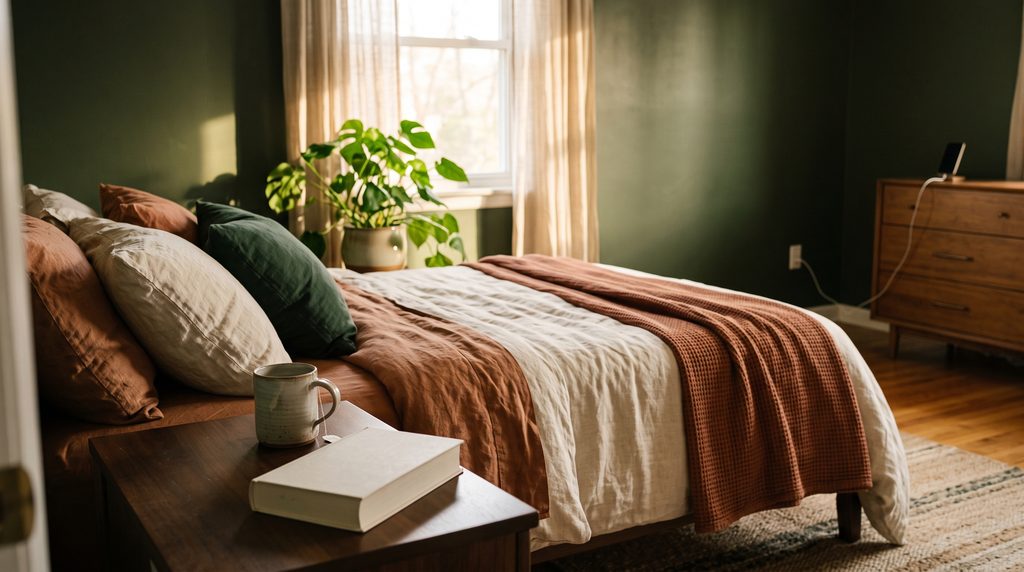
- Create a calm bedroom. Keep it quiet, dark, relaxing, and at a comfortable temperature.
- Park the devices. Remove TVs, computers, and smartphones from the bedroom.
- Watch what you eat and drink at night. Avoid large meals, caffeine, and alcohol before bedtime.
- Move your body. Being physically active during the day can help you fall asleep more easily at night.
If you want an easy way to add movement, check out my post on how to stay active after 30, 40 and 50. Also, the Mayo Clinic suggests limiting daytime naps, which is helpful to remember on those extra sleepy afternoons.
What does a simple wind-down routine look like?
You don’t need a fancy 12-step ritual. Instead, try this easy 30-minute routine. It works for most busy people:
- Set the scene: dim the lights and put your phone on the charger across the room
- Do a mini tidy-up: five minutes is enough, because a calm space helps a calm mind
- Jot down tomorrow’s to-do list: this gets the swirling thoughts out of your head
- Stretch gently: a few slow stretches help your body relax
- Do something quiet: read a few pages, listen to calm music, or sip some herbal tea
Over time, your body will start to connect this routine with sleep. Honestly, it’s like training a puppy, only quieter. 🐶
What about sleep and recovery?
Sleep is the main event, but recovery goes beyond the pillow. Rest days, gentle stretching, and quiet moments all count too.
In other words, taking a break isn’t lazy. It’s part of staying healthy, especially after 30, when your body may need a little more time to bounce back.
What if my schedule isn’t 9 to 5?
Not everyone sleeps at night, and that’s okay. Parents of teens, shift workers, and people with unpredictable days can still use the same ideas.
The trick is to anchor them to your own bedtime:
- Keep your sleep and wake times as steady as your schedule allows
- Make your bedroom as dark and quiet as possible, even during the day
- Wind down before sleep, no matter what time it is on the clock
What if I have a bad night (or a bad week)?
First of all, it happens to everyone. A rough night doesn’t mean your health is ruined, and stressing about it only makes it worse.
Instead, be kind to yourself. Take a short walk, drink some water, go to bed a little earlier, and try again tonight. 💚
However, if sleep problems continue for weeks, don’t just push through. Dr. Wytrzes suggests that if sleep problems persist after six weeks, it’s time to visit your primary care doctor. Likewise, it’s worth asking about loud snoring or breathing pauses during sleep, since a partner may notice those before you do. sutterhealth
FAQ: Sleep after 30, 40 and 50
How much sleep do I need after 40?
Most healthy adults do best with 7 or more hours of sleep per night, according to the AASM and Sleep Research Society. However, needs vary from person to person, so pay attention to how you feel.
Why do I wake up at 3 a.m. and can’t fall back asleep?
There are many possible reasons, including stress, hormonal changes, caffeine, alcohol, or sleep disorders. If it happens often, talk to a healthcare professional to find the cause.
Is it okay to take a nap?
A short nap can be helpful for some people. Still, the Mayo Clinic suggests limiting daytime naps, because long ones may make it harder to sleep at night.
Final thoughts: be kind to your sleep
Sleep after 30, 40 and 50 isn’t about perfection. Instead, it’s about small, steady habits and a lot of patience with yourself. So, pick one tip from this post and try it tonight. Maybe it’s parking your phone across the room, or maybe it’s a simple stretch before bed. One small step counts. 🌙
Now I’d love to hear from you: what’s your best trick for a good night’s sleep? Tell me in the comments! 👇
Disclaimer: I’m not a doctor, and this post is for general information only, not medical advice. If you have ongoing trouble sleeping, or if you suspect a sleep disorder or hormone-related changes, please talk to a healthcare professional.
Sources & Further Reading
- 7+ hours of sleep for adults: AASM and SRS consensus statement on sleep duration (AASM)
- Health risks of regularly sleeping less than 7 hours: Recommended Amount of Sleep for a Healthy Adult (PubMed Central)
- 1 in 3 adults don’t get enough sleep: Tips for Good Sleep (CDC)
- 5 habits for better sleep: Tips for Better Sleep (CDC)
- Limiting daytime naps (Mayo Clinic advice): Sleep Hygiene (USC)
- Perimenopause, menopause and sleep: How Perimenopause, Menopause and Midlife Impact Sleep (Sutter Health)